
Mardi Gras New Orleans – Parades, Bourbon Street & Nightlife Guide
Mardi Gras in New Orleans is one of the world’s biggest street parties. For weeks before Fat Tuesday, the city fills with parades, costumes, beads, balcony parties and nonstop nightlife in the French Quarter and beyond. Use this guide to plan your trip, find the best parades, and understand what Mardi Gras in New Orleans is really like.
What Is Mardi Gras in New Orleans?
Mardi Gras (“Fat Tuesday”) is the final day of Carnival season, which starts on January 6 (Twelfth Night) and ends on Fat Tuesday, the day before Ash Wednesday. In New Orleans, Carnival is all about:
- Krewes – Social clubs that organize parades and balls
- Parades – Decorated floats, marching bands and costumed riders throwing beads, cups and toys
- Street parties – Especially in the French Quarter, Marigny and along St. Charles Avenue
- Nightlife – Bars and clubs packed every night in the run‑up to Fat Tuesday
The biggest parades usually roll in the two weeks before Mardi Gras Day.
Best Parades & Krewes to See
Parades change slightly every year, but these are some of the most famous Mardi Gras parades in New Orleans:
- Krewe of Endymion – Giant Saturday night parade in Mid‑City, known for huge floats, celebrity guests and big throws
- Krewe of Bacchus – Iconic Sunday night parade with a celebrity “King” and massive, elaborate floats
- Krewe of Zulu – Famous for its decorated coconuts (highly prized throws), rolling on Mardi Gras morning
- Krewe of Rex – One of the oldest and most traditional parades, rolling on Mardi Gras Day
- Krewe of Muses – All‑female krewe known for creative floats and the iconic hand‑decorated shoe throws
Most big parades roll uptown along St. Charles Avenue, then head toward Canal Street.
Where to Experience Mardi Gras Nightlife
1. French Quarter & Bourbon Street
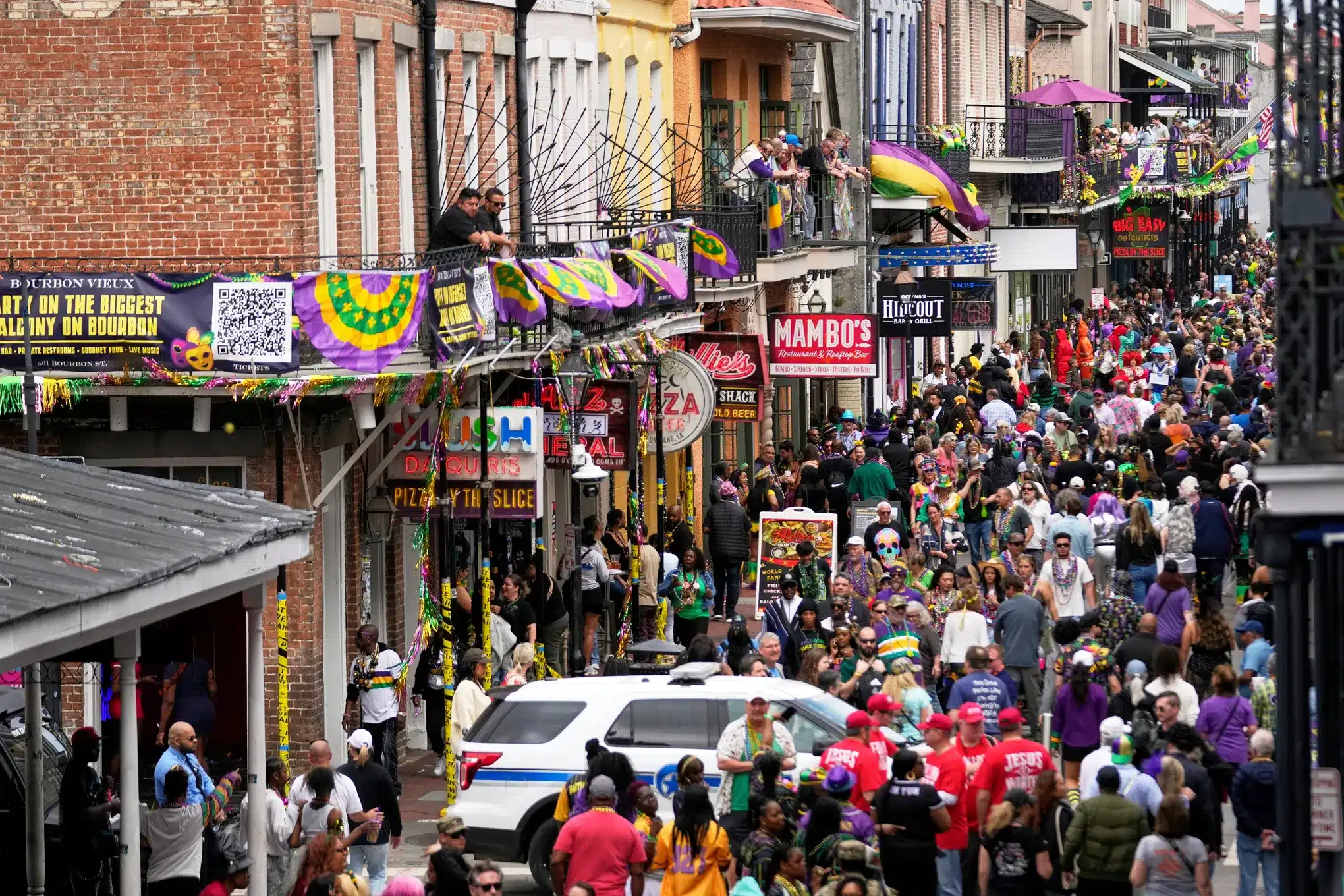
The French Quarter, especially Bourbon Street, is the centre of Mardi Gras nightlife:
- Wall‑to‑wall bars with live music, DJs and balcony parties
- People in costumes all day and night
- Drink specials, hurricanes and go‑cups (drinks in plastic cups you can take on the street)
- Balcony bead‑throwing and packed sidewalks
Bourbon Street is wild, noisy and crowded. If you want the craziest party atmosphere, this is it.
2. Frenchmen Street & Marigny
For a more music‑focused New Orleans nightlife experience during Mardi Gras, head to Frenchmen Street in the Faubourg Marigny:
- Live jazz, funk and brass bands every night
- Smaller crowds than Bourbon (but still very busy in Carnival season)
- A mix of locals and visitors
- Bars and clubs with proper stages and dance floors
Frenchmen is ideal if you want to party but still hear great live music.
3. Uptown, St. Charles Avenue & Local Bar Scenes
Along St. Charles Avenue and Uptown, the vibe is more about:
- Day‑drinking and tailgating along the parade route
- Families and locals watching parades with coolers and folding chairs
- Bars near the routes that fill before and after each parade
This is a great option if you want to combine parades plus a more local atmosphere, then head into the French Quarter or Frenchmen at night.
Clubs, Bars & Live Music During Mardi Gras
Specific venues can change, but popular New Orleans nightlife options around Mardi Gras usually include:
- Bourbon Street bars & clubs – Open fronts, DJs, dance floors, balcony access and drink specials
- Live music clubs on Frenchmen Street – Jazz, funk, brass bands and late‑night jam sessions
- Historic bars in the French Quarter – Cocktail spots, piano bars and blues joints
- Hotel lounges & rooftop bars – Good for pre‑gaming or a slightly calmer drink with views
Always check current schedules, cover charges and dress codes, especially for ticketed Mardi Gras events and balls.
Essential Tips for Mardi Gras in New Orleans
- Book early – Hotels near the French Quarter and St. Charles fill up months in advance
- Plan your dates – Check the official parade schedule and aim for the final 4–5 days before Fat Tuesday if you want maximum action
- Use comfortable shoes – You’ll walk and stand for hours
- Pack layers & a poncho – Weather in February can change quickly
- Carry cash & a card – Many bars accept cards, but cash speeds things up
- Stay safe – Keep valuables secure, stay with friends and use licensed taxis or ride‑shares late at night
FAQs – Mardi Gras New Orleans
1. When is Mardi Gras in New Orleans?
Mardi Gras Day (Fat Tuesday) falls on a different date each year, usually in February or early March. Carnival season starts on January 6 and runs through Fat Tuesday, with the biggest parades in the last two weeks.
2. Where is the best place to stay for Mardi Gras?
For easy access to parades and nightlife, stay in or near the French Quarter, Central Business District (CBD) or Uptown along St. Charles Avenue. Book as early as possible.
3. Is Bourbon Street the main place to party?
Bourbon Street is the wildest Mardi Gras party zone, but many locals prefer Frenchmen Street for live music and a more authentic New Orleans nightlife vibe.
4. Do I need tickets for Mardi Gras parades?
Parades are free to watch from the street. Tickets are only needed if you want grandstand seating, special balcony parties or private events.
5. Is Mardi Gras in New Orleans safe?
Mardi Gras is heavily policed and generally safe if you use common sense: stay with friends, watch your drinks, avoid flashing valuables and know your route back to your hotel.