
Carnival in Rio de Janeiro, Brazil
The Carnival in Rio de Janeiro (Portuguese: Carnival do Rio) officially begins on the Friday before Ash Wednesday and is one of the main attractions of the port city.
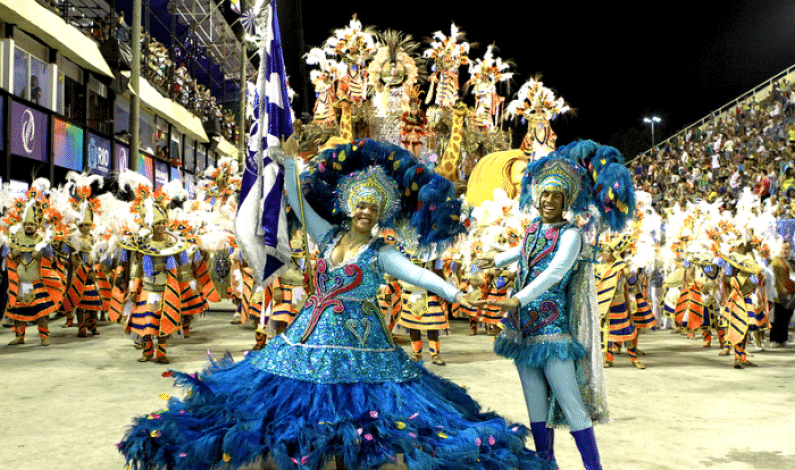 The colourful parade of Samba schools is one of the world’s biggest festivals and draws several thousand people every year. The Carnival is an extraordinary spectacle in Brazil, where people come to celebrate until the early hours of the morning. There are almost no rules; often, it means that at this time, “All the rules are lifted”. It’s a time when man knows no bounds. Rich and poor celebrate together on the streets, in restaurants and on the beach – almost any time of day, you can hear the rhythm of Samba from each small side street. Beer consumption rises greatly during Carnival celebrations.
Top 10 insider tips for Rio de Janeiro
- In Rio you would be eating lots of feijoada, the Brazilian national dish. A bean stew which is refined at the feijoada Completa SEC (typical Brazilian beef jerky), various meats and sausages, pig ears, footers and tail with Carne.
- Peckish in between Salgados (salty pastry with various fillings such as chicken, cheese, or minced meat) are highly recommended. The best place for it is in Lapa, at the corner of Rua dos Invalides and MAM de San.
- The classic in Rio is, of course, caipirinha – best with Cachaça, otherwise with vodka. It is also often served with fruit, including strawberries, passion fruit and pineapple. Some also add a shot of sweetened condensed milk. A good place to try the caipirinha drink is the bar Urca, right on the beach behind the sugar loaf.
- In the Avenida Rio Branco in the centre, close to the Carioca Metro station, you will find everything your heart desires. All major brands, as well as small, unknown designers, can be found. This is the best place in Rio de Janeiro to go shopping.
- Every Tuesday evening do rato is in lapa in the BECO a Samba night, of course with live music. From approximately 23:00, it is always very lively, with plenty of drinks and music. Worth a visit is the bar itself because of the tiles on the wall. Otherwise, Bukouski, Botafogo is another good place for the party. There are three floors, each with a different type of rock music.
- The country’s money is REAL, plural: Reales. Menus and price lists, that is, with $, R$ or abbreviated to R.
- When you arrive in Rio, it is better to exchange your money for the local currency at the numerous Bureaux de change. They are usually significantly cheaper than banks, and price comparisons are always worthwhile.
- Keep your cash in a hotel safe or a safe place, or wear a waist or side bag to put your valuables in, because putting your money and other valuables in your pockets might be unsafe and risky.
- With a Visa card or similar cards, you can get money from the machines around the clock at many banks in Copacabana.
- The sands of Copacabana beach is 5 km long and approximately 50-100 m wide. In the northern area, there are many rental of sun loungers and parasols. Each piece costs 1 round per day. On offer are also cold drinks and hot food. The most famous meeting points of European tourists are the rental items from Senna and Flavio. Besides Copacabana, many tourists like the beach of Ipanema. On Flamengo Beach, the locals remain largely among themselves.
How to get to Rio de Janeiro
Recommendation: Arrival by plane
The international airport of Rio is the Aeroporto Internacional Rio de Janeiro (RIO) or Galeão-Antonio Carlos Jobim (GIG), approximately 20 km north of the city centre. German airlines such as Lufthansa, KLM (Switzerland) and TAM also offer Umsteigsmöglichkeiten. The flight takes around 12 hours, and with a little luck, you can find a flight for 900 euros. For young people aged 24 and under, you get a 25% discount. It may be slightly cheaper with British Airways via London or with Air Portugal via Lisbon. For entry to Rio, you need a visa, or only a passport which must be valid for at least 6 months.